
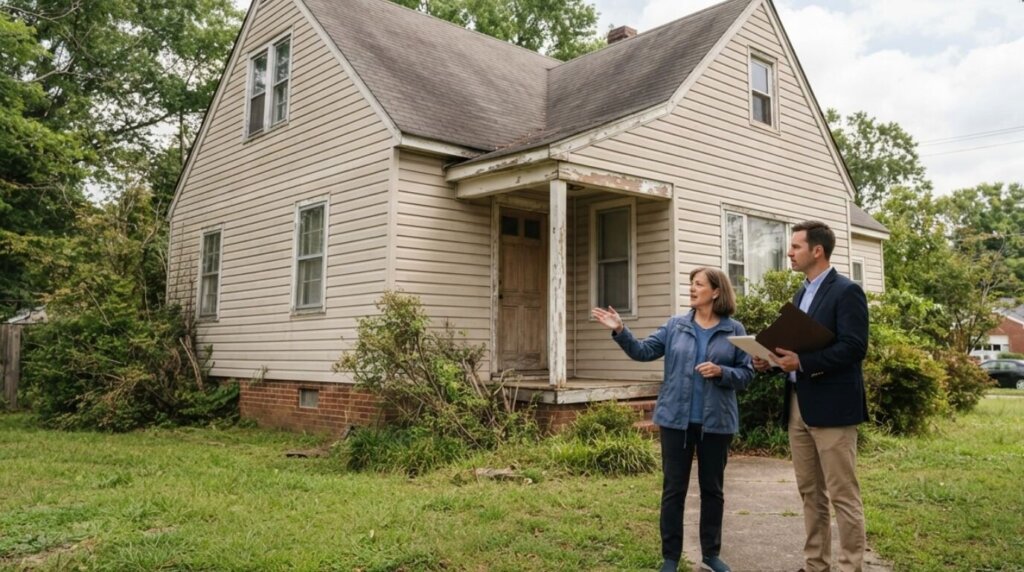
You can sell a house as-is in Hampton Roads without making repairs, and homeowners looking to sell their house as-is in Hampton Roads can do so under Virginia law. Selling as-is removes your obligation to repair the property or to credit the buyer for defects found later. It does not remove your obligation to disclose, which the Virginia Residential Property Disclosure Act governs.
What “As-Is” Actually Means in Virginia
When you sell a house as-is, it is sold in its current condition. The seller does not have to fix anything or pay the buyer for problems found later. In Virginia, buyers are expected to do their own inspections and research before buying. Here is what that looks like in practice:
- For the seller: No obligation to fix, upgrade, or offer repair credits.
- For the buyer: The responsibility to inspect and investigate falls on them.
- What does not change: The seller’s duty to complete the required disclosure statement.
This approach is based on Virginia’s disclosure law, which tells buyers to do as much research as they think is needed. If you need help with the wording for an as-is clause in your contract, talk to a real estate attorney licensed in Virginia.
What Virginia Law Still Requires You to Disclose
Even in an as-is sale, Virginia requires the owner to provide a residential disclosure statement, which the Real Estate Board provides and that must reach the purchaser before the contract is ratified. The statement notifies buyers that the owner makes no representations about the property’s condition and that buyers must investigate for themselves. A few property-specific disclosures also stay mandatory. Certain transfers are excluded from these requirements under § 55.1-702, such as some foreclosure, estate, and court-ordered transfers.
| Disclosure | When It Applies | Code Section |
| Residential property disclosure statement | Most residential transfers, before contract ratification | § 55.1-703 |
| Military air installation noise or accident potential zone | Property in a locality with a military air installation | § 55.1-704 |
| Repetitive flood risk loss | Owner knows the home is a repetitive-loss structure | § 55.1-708.2 |
| Pending legal action affecting the property | A lis pendens exists against the property | § 55.1-706.1 |
The military air installation disclosure matters across Hampton Roads, given the region’s concentration of naval and air installations. These disclosures are separate from the repair question, and they apply whether or not a sale is as-is. For how the rules apply to your specific situation, consult a Virginia-licensed real estate attorney.
Repairs You Do Not Need to Make
If you sell as-is, you do not have to make the house meet market standards before selling. Cash buyers usually consider the home’s current condition when making an offer, so you do not need to do the work ahead of time. These are some things sellers often leave as they are:
- Cosmetic condition, such as worn paint, flooring, or general wear.
- Dated finishes and fixtures that still function.
- Deferred maintenance that has built up over time.
- Clearing out belongings, since many buyers accept a property with items left behind.
This does not guarantee anything about specific problems, since each property is different. The main idea is that normal wear and tear or a long list of tasks do not have to prevent you from selling.
When Repairs Are Still Worth Doing
Selling as-is is not always the best way to get the most money. If your house is almost market-ready and you have time, small repairs and a listing can bring in more. This usually makes sense if all three of these things apply:
- The property already shows well and needs only light work.
- No time pressure forces a quick sale.
- You can fund the repairs and carrying costs while it sells.
For many people, those three things do not apply, which is when selling as-is makes sense. The best way to decide is to honestly compare both options and see which one works for you.
Myths vs Facts About As-Is Sales
People often misunderstand as-is sales, especially about what sellers must disclose and what rights buyers have. Here are some common myths and the real facts.
| Myth | Fact |
| Selling as-is means disclosing nothing | Disclosure obligations are separate from repair obligations |
| As-is sales are only for damaged houses | Any property can be sold in its current condition |
| You cannot sell as-is in Virginia | Virginia permits as-is sales and is buyer-beware |
| Buyers cannot inspect an as-is property | Buyers are specifically advised to inspect and investigate |
| As-is protects you from every future claim | It limits repair obligations, not disclosure duties |
An as-is sale can limit a seller’s repair obligations, but it does not eliminate legal disclosure requirements or give the seller protection from every future claim.
Conclusion
You can sell without repairing, and you cannot sell without disclosing. Those are two separate obligations, and an as-is sale changes only the first. Understanding the difference protects you long after closing. If an as-is sale fits your situation, request a no-obligation offer from Hampton Roads House Buyers.
FAQs
Can you sell a house as-is in Virginia?
Virginia allows as-is sales and is mostly a buyer-beware state. Buyers should do their own inspections and research before buying, since the seller does not make promises about the property’s condition.
Do you still have to disclose problems when selling as-is?
Selling as-is means you do not have to make repairs, but you still have to disclose information. You must give the buyer the residential disclosure statement before the contract is finalized.
What does the Virginia residential property disclosure statement cover?
The statement tells buyers that the owner does not make promises about the property’s condition and that buyers need to check things for themselves, along with any required legal disclosures.
Are any home sales exempt from Virginia disclosure requirements?
Some types of sales are excluded under § 55.1-702. Whether you qualify for an exemption depends on the type of transfer, so check with a Virginia-licensed attorney.
Will a buyer still inspect a house sold as-is?
Selling as-is means you are not agreeing to make repairs, but buyers can still inspect the property. Most buyers choose to inspect before completing the purchase.